Reimagining Curriculum for a Healthier, More Connected America
By Dr. Holloway
A Nation’s Curriculum Is Its Moral Compass
When John Dewey the philosopher often called the architect of American education; imagined the modern classroom, he didn’t see rows of desks or standardized tests.
He saw a microcosm of democracy itself: every classroom, he said, should represent the world we hope to build.
For Dewey, curriculum was not just about content, but about citizenship.
Each lesson, each interaction, was a rehearsal for how we would live, work, and care for one another as a society.
But over the past century, somewhere between industrial standardization and digital distraction, that moral compass drifted.
And nowhere is that drift more visible or more costly than in our healthcare education.
The Gap in Our Medical Curriculum
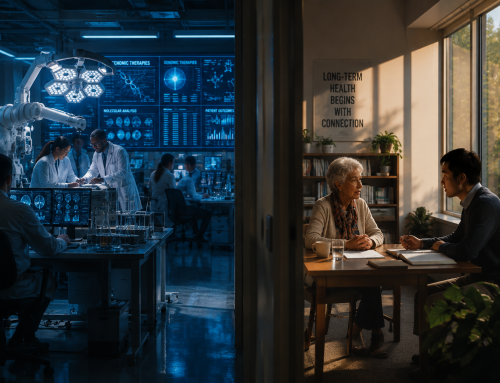
When I conducted my own gap analysis of today’s medical and health education systems, one insight became painfully clear:
we are not beginning with the end in mind.
Our programs are rigorous, but misaligned. They train for treatment, not prevention; for illness, not wellness; for systems, not societies.
Even more striking?
Across most institutions, geriatrics and healthy aging barely make an appearance.
We are preparing future clinicians to treat the beginning and middle of life, but not its fullness.
We talk about lifespan, yet neglect lifeworth — the art and science of aging well.
A New Blueprint: Beginning Where We End
If every classroom is to mirror the society we want, then healthcare education must begin not in college, but in kindergarten.
Imagine if from preschool through high school, students learned about:
- The human body as a lifelong ecosystem, not merely a biology unit.
- Nutrition and movement as daily rituals of self-respect.
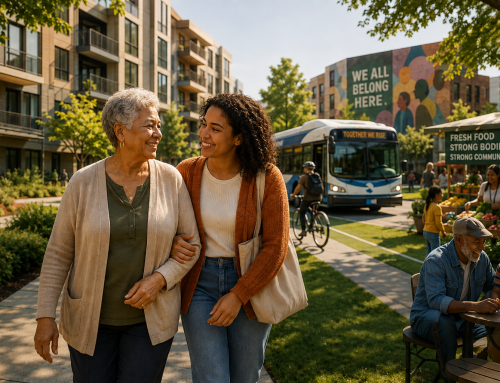
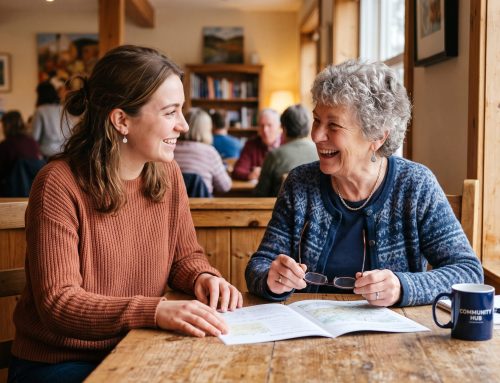
- Geriatrics and empathy through intergenerational learning, where students visit senior centers as part of civic science.
- Social determinants of health not as “distant problems,” but as living ecosystems: housing, food, safety, purpose that every community can strengthen together.
This vision would blend Montessori’s learner-centered philosophy with public school best practices: tactile, inquiry-driven, inclusive learning that connects science with humanity.
Every student would graduate not only literate, but health-literate — equipped to build a healthy society.
What We’re Not Teaching — and Why It Matters
My analysis revealed another serious omission:
our education system treats social and emotional skills as extracurricular — not foundational.
We test for math and reading, but not for empathy, communication, or cooperation.
We assign leadership as a title, not a competency.
And we let social engagement decline, even as new technologies, social media, digital classrooms, virtual everything, further isolate us.
If we are serious about public health, we must reframe these as essential subjects, not electives.
Communication should be a core curriculum requirement, not a soft skill.
It must be taught not just as “speech” or “English,” but as relationship literacy, the ability to connect, listen, and adapt across cultures and mediums.
Because when communication erodes, so does community, and with it, our collective health.
Cultural Awareness and the New Resiliency
Resiliency is not built in isolation. It’s built through cultural awareness, empathy, and practice — skills that can and must be intentionally taught.
We cannot prepare students for healthcare, leadership, or citizenship without grounding them in cultural humility and human engagement.
These are not add-ons; they are the bedrock of unity.
Every student, regardless of discipline, should graduate understanding how culture shapes health — and how shared humanity shapes healing.
Embedding the Social Determinants of Health
In public health, we often analyze the social determinants of health reactively, only focusing on poor neighborhoods or underserved populations.
But what if we approached them proactively, as a design framework for education itself?
Imagine a curriculum where students don’t just study the social determinants — they build around them:
| Determinant | Proactive Educational Integration |
| Economic Stability | Teach financial literacy and job skills as health interventions. |
| Education Access | Integrate mentorship and intergenerational tutoring programs. |
| Healthcare Access | Involve students in community wellness projects early. |
| Neighborhood & Environment | Promote urban farming, sustainability, and safe-community design. |
| Social & Community Context | Create service-learning tied to empathy, inclusion, and collaboration. |
Each determinant becomes a curricular ecosystem that prepares students not just for a career, but for citizenship in a thriving society.
The Red, White, and Blue Print
If the original American curriculum was built to reflect our democratic ideals, then this “Red, White, and Blue Print” must reflect our new collective goal:
to create a society that values health, humanity, and wholeness as its civic virtues.
Red for the lifeblood of empathy.
White for the clarity of communication.
Blue for the depth of collective wisdom.
Together, they form more than a flag, but a framework.
An education system that heals.
The Vision Moving Forward
This new curriculum is moving past a dream into an intentional la design.
A roadmap where classrooms become catalysts for wellness, and learning becomes healthcare.
It’s what Dewey envisioned all along: an education that mirrors the society we wish to build.
And if we dare to rebuild it now, starting in our schools, our homes, and our healthcare systems, we might just heal the nation from the inside out.