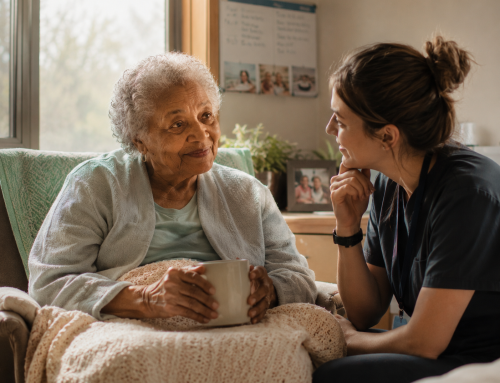
On September 13, 2026, National Grandparents Day, I will officially release my book, The Social Determinants of Health Toolkit. The timing is intentional. Grandparents Day provides an opportunity to honor older adults while also thinking seriously about the environments, systems, relationships, and resources that shape whether people are able to age with health, connection, dignity, and opportunity.
This week, Johns Hopkins Population Health Analytics released new commentary summarizing a growing body of research on social needs and population health. Its central message is highly relevant to healthcare today: housing, food access, economic stability, transportation, and other social conditions consistently appear in clinical data through hospitalization, emergency department utilization, chronic disease burden, readmissions, and cost.
That is precisely why this conversation must increasingly move from awareness to application.
Why I Wrote the Social Determinants of Health Toolkit
Social Determinants of Health, commonly referred to as SDOH, describe the conditions in which people are born, live, learn, work, play, worship, and age. Healthy People 2030 recognizes that these conditions have significant implications for health, functioning, wellbeing, and quality of life.
For older adults, this becomes especially important. Economic stability, healthcare access, transportation, neighborhood conditions, social connection, food access, and other everyday realities can influence the ability to remain healthy, independent, engaged, and connected as people age. Healthy People 2030 specifically recognizes the substantial influence SDOH can have on healthy aging.
I developed The Social Determinants of Health Toolkit to help translate this increasingly important body of knowledge into something people can actually use.
The book is designed for healthcare professionals, caregivers, educators, students, community leaders, advocates, and others who want practical ways to understand SDOH, recognize areas of strength and need, and create meaningful improvements within individuals, organizations, and communities.
Moving From Understanding SDOH to Doing Something About Them
The Toolkit takes readers through seven practical areas:
- Economic Stability
- Education Access and Quality
- Healthcare Access and Quality
- Neighborhood and Built Environment
- Social and Community Context
- Food and Nutrition
- Work and Recreation
Throughout the book, readers encounter practical exercises, stories, reflection questions, tools, and action planning approaches designed to help answer several important questions:
Where are we now?
What conditions are supporting health and wellbeing?
Where are the opportunities for improvement?
What can we realistically change?
How can we help create stronger conditions for someone else?
This is one of the ideas I want the book to bring into the larger SDOH conversation. Social determinants are frequently discussed through the language of deficits, risks, and barriers. Those issues deserve attention, while healthcare and community organizations also benefit from identifying and strengthening positive social determinants of health such as supportive relationships, meaningful connection, access to opportunity, safe environments, dignity, purpose, and reliable community resources.
Johns Hopkins Just Highlighted Why This Matters Now
The August 26 analysis from Johns Hopkins is especially timely.
Johns Hopkins summarized research involving more than 13 million patients showing a strong relationship between documented social needs and hospital readmissions. Thirty day readmission rates increased from 11.5% among patients with no documented social need domains to 63.5% among patients with documented needs across all five domains.
Another study highlighted by Johns Hopkins examined 1.3 million Johns Hopkins Health System patients. Researchers found that individual social needs and community conditions provided complementary information about emergency department utilization, meaning healthcare organizations gain a fuller picture when they understand both the circumstances of the individual and the environment surrounding that person.
A separate study summarized in the same Johns Hopkins review found that 68% of patients at a federally qualified health center reported at least one unmet social need, and multiple needs were associated with greater subsequent emergency department use and hospitalization.
These are healthcare outcomes.
They are also reminders that what happens between healthcare encounters matters enormously.
The Next Standard: Identify, Understand, Act, and Measure
Johns Hopkins makes another important point. Successful SDOH work requires an infrastructure that extends beyond identifying a social need.
Healthcare organizations need systems that help them document needs meaningfully, make information available to the appropriate care teams, connect people with appropriate interventions, provide culturally and linguistically appropriate support, and measure outcomes over time.
That creates a useful standard for organizations serious about this work.
- Ask Systematically
Organizations need consistent approaches for understanding the social conditions affecting patients, families, and populations.
Structured assessment makes it easier to recognize patterns that may otherwise remain invisible.
- Document What Is Learned
Information becomes more actionable when it is recorded in ways that clinicians, case managers, social workers, community health workers, and other members of the care team can access and understand.
Johns Hopkins highlights the use of tools such as Social Need Markers based primarily on ICD 10 Z codes as one approach to structured identification of documented social needs.
- Understand Both the Person and the Community
A patient’s individual circumstances tell part of the story. Geography, neighborhood resources, transportation systems, housing conditions, community infrastructure, and other environmental factors provide another layer.
Johns Hopkins’ work reinforces the value of looking at both levels together.
- Turn Information Into Action
The ultimate value of identifying SDOH comes from what happens next.
Organizations need practical pathways for connecting people with services, resources, community organizations, healthcare professionals, and other forms of support appropriate to the need identified.
- Deliver Support With Cultural and Human Context
People experience social conditions differently.
Effective responses require cultural humility, communication, language access, respect for individual priorities, and an understanding of what matters to the person receiving care.
- Measure What Happens
Organizations should determine whether interventions are actually improving the outcomes they were designed to influence.
That may include social needs, patient experience, quality of life, healthcare utilization, engagement, referrals completed, access to resources, or other meaningful measures.
This creates a learning system in which screening informs action, action produces data, and data informs improvement.
Where the Toolkit Fits
The Social Determinants of Health Toolkit was developed to make this work more approachable and actionable.
Readers can use the book to examine SDOH in their own lives, understand how these conditions affect the people and communities they serve, identify areas for growth, and develop concrete actions that strengthen health and wellbeing.
The Toolkit also connects with the Social Determinants of Health Test, available through Tellegacy. The assessment helps participants examine different SDOH areas, better understand their existing strengths, and identify practical opportunities for improvement.
The goal is progress.
A strong SDOH approach recognizes risk while also identifying resources, relationships, capabilities, and opportunities that can be strengthened.
Why Grandparents Day
I could think of few better days to release this book.
National Grandparents Day falls on Sunday, September 13, 2026.
For me, honoring older adults should include serious attention to the systems and conditions that influence their ability to remain healthy, socially connected, heard, supported, and involved in their communities.
It also means preparing the next generation of healthcare professionals, community leaders, students, caregivers, and advocates to recognize those conditions and respond thoughtfully.
That is the larger purpose behind this book.
Coming September 13, 2026
The Social Determinants of Health Toolkit will officially be released on Grandparents Day, September 13, 2026.
The formal preorder opportunity will be available soon. Readers who would like to ask questions, receive additional information, or reserve a copy today can contact:
Healthcare organizations, universities, community agencies, professionals, students, caregivers, and individuals are all invited to be part of this conversation.
The evidence continues to become clearer. Social conditions influence health outcomes, healthcare utilization, quality of life, and the ability of communities to thrive.
The opportunity before us is to turn that knowledge into action.
The Social Determinants of Health Toolkit was created to help us do exactly that.
References
Johns Hopkins Population Health Analytics. (2026, August 26). Social needs and population health: What the research shows. Read the Johns Hopkins analysis
Office of Disease Prevention and Health Promotion. (n.d.). Social determinants of health. Healthy People 2030. Healthy People 2030 SDOH resource
Office of Disease Prevention and Health Promotion. (2026). Social determinants of health and older adults. Healthy People 2030 healthy aging resource