One question sits at the center of much of my work:
Are we making “strides” in progress only to lose the deeply human qualities that those before us worked so hard to build—resilience, creativity, social discovery, epiphany, and authentic human actualization?
It’s a question that becomes more urgent as technology accelerates and efficiency increasingly defines success. And it’s a question powerfully reinforced in Brains Need Friends by Ben Rein.
The central message of the book is striking in its simplicity—and seriousness:
social connection is not a luxury. It is a biological necessity.
Social Connection Is Biology, Not Preference
Rein’s work makes clear that the human brain treats social connection the way it treats sleep, nutrition, or water. When we are isolated, our bodies don’t merely feel sad—they respond as if under threat. Cortisol rises. Memory centers shrink. Long-term loneliness increases mortality risk.
Conversely, meaningful social interaction releases oxytocin, dopamine, and serotonin—neurochemicals that reinforce bonding and signal safety.
This is not sentimentality. It is survival biology.
And yet, modern systems increasingly frame connection as optional, secondary, or inefficient.
Progress Without Connection Isn’t Progress
One of the most troubling ideas Rein highlights is that our brains are poor predictors of social reward. We routinely underestimate how much we’ll enjoy conversations, connection, or presence with others. As a result, we avoid interaction—especially in a world that makes avoidance easy.
Digital tools promise efficiency and scale, but they often strip away the cues that make us human: tone, body language, eye contact, shared silence. Rein’s research shows that in-person interaction consistently outperforms digital interaction in improving mood, cognition, and trust.
The danger is not technology itself.
The danger is advancing so quickly that we forget what technology cannot replace.
Quality Over Quantity—Always
Another core insight from Brains Need Friends is that one deep, safe, consistent relationship can outweigh dozens of shallow ones. The brain does not measure connection in numbers. It measures it in trust.
This matters deeply for aging, healthcare, education, and leadership.
As people age, what sustains them is not activity alone, but meaningful connection. As students grow, what shapes them is not content delivery, but relational learning. As communities evolve, what holds them together is not efficiency, but shared humanity.
Empathy, Likability, and Generosity Are Skills
Rein also challenges the idea that empathy and social skill are fixed traits. They are trainable capacities. Likability—making others feel valued and safe—is not superficial; it is foundational to wellbeing and success across the lifespan.
Generosity, too, is biologically wired. Even animals demonstrate cooperative and giving behaviors because connection strengthens survival.
When we reduce people to roles, outputs, or metrics, we don’t just diminish them—we weaken the systems we depend on.
Why This Matters to Tellegacy
At Tellegacy, this science isn’t abstract—it’s lived.
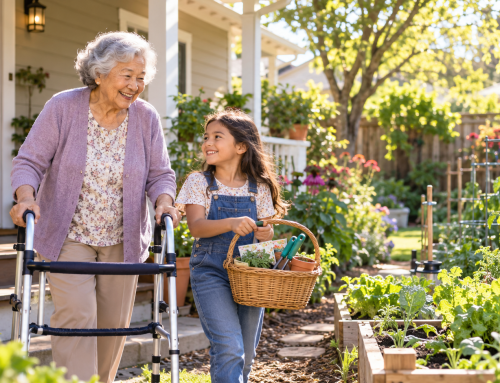
Our intergenerational programs are built on the understanding that human connection strengthens both sides of the relationship. Younger participants develop empathy, communication, and self-awareness. Older adults experience dignity, belonging, and purpose. The legacy books that emerge from these relationships preserve not just stories, but relational meaning.
This work reinforces something Rein’s research makes unmistakable:
We don’t outgrow our need for people.
Healthy aging doesn’t begin in old age.
It begins when we teach—early and often—that connection is foundational, not optional.
Choosing Humanity as We Advance
So as we innovate, scale, and “progress,” the question remains:
Are we advancing in ways that honor the organic, resilient, creative human qualities that make life meaningful—or are we optimizing them away?
True progress doesn’t abandon humanity.