Dr. Jeremy Holloway along with Restorative Justice expert, Emma Green, recently facilitated a powerful workshop on Restorative Justice for public school administrators across the regions of New Mexico –June 2-5, 2025. During the session, he presented a compelling framework that challenged traditional notions of school safety and called for a deeper, more proactive approach to cultivating environments of belonging, well-being, and lifelong health.
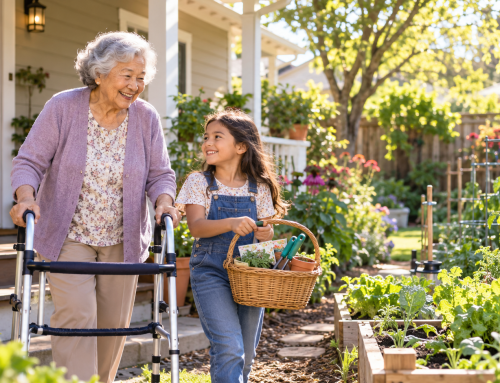
Dr. Holloway emphasized that ageism can be dramatically reduced when healthy aging and foundational, health-promoting geriatric knowledge are introduced as early as elementary school. He challenged school leaders to recognize that students are not simply disengaged—they gravitate toward spaces where they feel a deep sense of belonging: socially, culturally, and emotionally. While physical structures may create environments that are safe in form, they can not and do not provide the emotional and cultural safety students need to thrive. He noted that policies, though essential for defining goals and expectations, cannot do the relational work of building inclusive and welcoming spaces. That work belongs to people—collaborating daily through shared values, beliefs, vision, and mission. Only then can we build communities that nurture true belonging and, in doing so, promote lifelong health and well-being across individuals, families, and society.
When students grow up with a positive understanding of the aging process, they are more likely to value older adults, embrace intergenerational relationships, and contribute to a culture of respect and inclusion across the lifespan. While physical safety remains essential, social, cultural, and emotional safety are what ultimately draw students in—or push them away. “Students are absent from school,” he shared, “not because they don’t care, but because they gravitate toward spaces and places where they feel seen, heard, and valued.”
Policies on paper may outline goals and procedures, but they do not do the legwork of building inclusive, welcoming communities. That work must be carried out by people—day in and day out—through sincere and consistent expressions of welcome. Belonging is built by humans, not handbooks.
Through a restorative lens, Dr. Holloway invited school leaders to reflect on how their daily practices, values, and systems shape the way students experience safety and community. Sitting in a circle, he encouraged collaborative work grounded in shared values, beliefs, vision, and mission—a process that doesn’t just change school culture, but promotes healthy longevity for individuals, communities, and future generations.
This workshop reaffirmed that the bridge between restorative justice and healthy aging is not a theoretical one—it’s a human one, built in the classroom, in school hallways, and in every meaningful connection we make.